Pacific Indigenous Village
This year's show welcomes the Pacific Indigenous Village, a Portland State University initiative that brings Pacific Islander elders, students, cultural practitioners, and community members together to strengthen Indigenous knowledge, cultural identity, and climate resilience.
PSU Pacific Island students showcase
Le Pasefika Runway is proud to partner with the Pacific Indigenous Village Project, Pacific Island Studies, and the Pacific Islander Club at Portland State University to present this Pacific Island showcase. The students represent islands across the Pacific, including the Northern Marianas, Fiji, Palau, Samoa, Tonga, the Federated States of Micronesia, Guam, and Hawaii.
In honor of Tua Fa’alogo, the Samoan founder of Le Pasefika Runway, the evening celebrates Samoan culture with Tuiga by FotuoSamoa, a bespoke collection of Samoan ceremonial headwear, and a Samoan legend performed through dance by the Pacific Islander Club.
Born and raised in Savai’i, Samoa, Tupa’imatuna FotuoSamoa has been making tuiga for more than 35 years, first as an apprentice to her mother, a tuiga maker herself. She has studied the historical architecture of the tuiga to preserve the integrity of this sacred ceremonial headwear. Her work has been featured at the Te Papa museum of Aotearoa, worn by Miss Samoa contestants over the years, designed for Black Grace, and worn by taupou around the world.
As people of the moana, the Pacific scholars and climate fellows carry their stories through myths and legends; their histories and cultures live in oratory, dance, song, and cultural practice. On show night the students perform Pei O Auma and Si Fe’e, the legend of the octopus and the rat: a story of trust and betrayal, carried in their journey.
Pacific Elders
Kolini Fusitua
Founder, Tonga Day Portland. Pacific Islands Program Coordinator, Immigrant and Refugee Community Organization (IRCO).
Kumu Hula Leialoha Kaʻula
Founder and Executive Director, Ka ʻAha Lāhui O ʻOlekona Hawaiian Civic Club (KALO HCC).
Angelica “Angie” Jackman
Founder and Director, Teva Oriata Polynesian Dance School.
The Honorable Eldon J. Alik
Consul General, Consulate General of the Republic of the Marshall Islands.
Vui Asiata Dr. Toeutu Faaleava
Advisory Board Member, Samoa Pacific Development Corporation. Director, Ronald E. McNair Scholars Program, Portland State University.
Principal Investigator
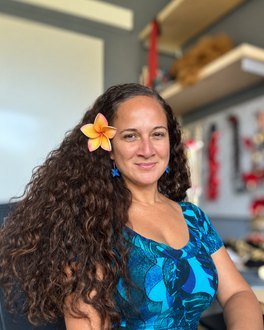
VA’ASILI’IFITI DR. LAGIPOIVA CHERELLE JACKSON
Professor of Pacific Island Studies, Portland State University
The inaugural Professor of Pacific Island Studies at Portland State University, Dr. Lagipoiva is an Indigenous Samoan scholar and High Chief from the island of Savai’i. Her academic and professional work spans the climate crisis, human rights, gender, and Indigenous knowledge systems, with a particular focus on reclaiming the place of Indigenous knowledge within academia and safeguarding Indigenous intellectual and cultural sovereignty in the age of artificial intelligence.
An award-winning journalist with more than two decades of experience reporting across the Pacific Islands, she brings together scholarship, journalism, and community leadership to advance Pacific perspectives in global conversations, creating spaces where Pacific Indigenous knowledge is studied, respected, practiced, and sustained.